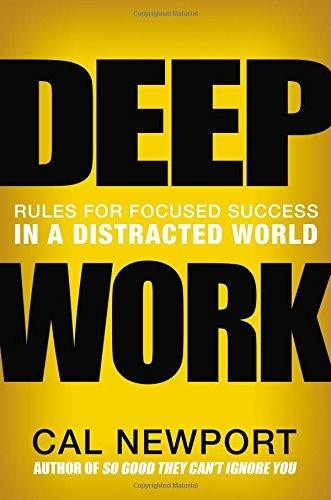
Newport's argument is that the ability to focus without distraction on cognitively demanding work — 'deep work' — is becoming both increasingly rare and increasingly valuable, precisely because modern work culture pulls constantly towards shallow, reactive busyness. The book combines the case for why deep work matters with concrete rules for building the capacity to do it, in a world engineered to prevent it.
Key lessons
- Deep work — focused, undistracted, cognitively demanding effort — produces disproportionate value compared with shallow, reactive busyness.
- The capacity for deep work is trainable, like a muscle, through deliberate practice and ritual, not just willpower in the moment.
- Constant context-switching between shallow tasks carries a real cognitive cost that lingers well after you've switched back.
- Schedule deep work like any other important commitment — protected blocks in the calendar, not something that happens if time allows.
- Quit social media and low-value digital habits that don't clearly serve something you genuinely value, rather than defaulting to using everything available.
The businesses and careers that compound fastest are usually built on protected, undistracted thinking time — which almost nobody defends by default, so it has to be deliberately scheduled.
What’s aged well
If anything, the argument has become more relevant as digital distraction has intensified since 2016.
What feels outdated
A couple of specific technology and social-media references have moved on, but the core argument doesn't depend on them.
The Business Stuff verdict
A genuinely practical case for protecting focus, with concrete rules rather than vague advice to 'concentrate more'.
Three things to actually do after reading it
- Block one recurring 90-minute slot this week purely for deep, undistracted work on the highest-value task in the business.
- Turn off notifications for one communication channel during your protected deep work block, permanently.
- Audit one low-value digital habit and either quit it for a month or replace it with something more deliberate.
If you liked this, read next
Five similar books
- Atomic Habits (James Clear)
- Essentialism (Greg McKeown)
- Indistractable (Nir Eyal)
- The One Thing (Gary Keller)
- Four Thousand Weeks (Oliver Burkeman)