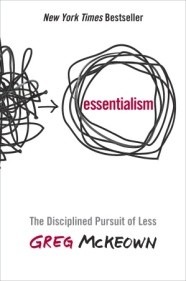
McKeown's core argument: 'the disciplined pursuit of less' beats trying to do everything. Almost everything is a trade-off, and the essentialist deliberately identifies the vital few priorities and says a genuine, structured no to the rest, rather than spreading effort thin across many good options.
Key lessons
- Almost everything is a trade-off — saying yes to one thing is always implicitly saying no to something else.
- A clear, deliberate 'no' to good-but-not-essential opportunities protects capacity for the genuinely vital few.
- Essentialism isn't about doing more in less time — it's about doing only what genuinely matters, well.
- Build in a buffer and protect against overcommitment before it happens, rather than trying to recover from it after.
You can't do everything well — the essentialist skill is a deliberate, disciplined 'no' to good options in order to say a full yes to the vital few.
What’s aged well
The core argument against overcommitment has, if anything, become more relevant as demands on attention have increased since 2014.
What feels outdated
Nothing significant; the philosophy is evergreen.
The Business Stuff verdict
A genuinely useful mindset shift for owners spread too thin across too many priorities.
Three things to actually do after reading it
- List your current commitments and identify the one or two that are genuinely essential versus merely good.
- Practise saying a clear, graceful no to one good-but-non-essential request this week.
- Build a deliberate buffer into your schedule before it's needed, rather than only reacting once overcommitted.
If you liked this, read next
Five similar books
- The One Thing (Gary Keller & Jay Papasan)
- Deep Work (Cal Newport)
- Four Thousand Weeks (Oliver Burkeman)
- The 4-Hour Workweek (Tim Ferriss)
- Company of One (Paul Jarvis)