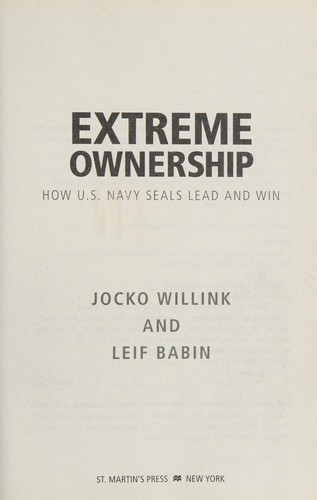
Two former Navy SEAL officers translate combat leadership lessons into business principles, built around one core idea: a leader must own everything in their world, with no excuses. Each principle is paired with a war story and a business case study showing the same lesson applied.
Key lessons
- Extreme ownership: a leader takes full responsibility for outcomes, with zero excuses, regardless of what the team did.
- There are no bad teams, only bad leaders — poor team performance is a leadership failure to diagnose, not a team failing to explain away.
- Simple, clear communication beats complex plans that nobody can execute under pressure.
- Decentralised command — giving people the context and authority to make decisions without checking in — scales leadership beyond one person.
Genuinely owning every outcome, without exception or excuse, is what earns a leader the credibility and trust needed to lead well.
What’s aged well
The core accountability principle is timeless and transfers cleanly from combat to business contexts.
What feels outdated
The military framing and tone won't suit every reader or every culture, and needs deliberate translation into a civilian workplace.
The Business Stuff verdict
Blunt, memorable and genuinely useful for building a stronger accountability culture, if you can translate the military framing to your context.
Three things to actually do after reading it
- The next time something goes wrong, write down your own contribution to the failure before assigning blame elsewhere.
- Simplify your next team briefing until someone outside the business could follow it without extra explanation.
- Identify one decision currently bottlenecked on you that a team member could make with the right context.
If you liked this, read next
Five similar books
- The Hard Thing About Hard Things (Ben Horowitz)
- Radical Candor (Kim Scott)
- High Output Management (Andy Grove)
- Can't Hurt Me (David Goggins)
- Principles (Ray Dalio)