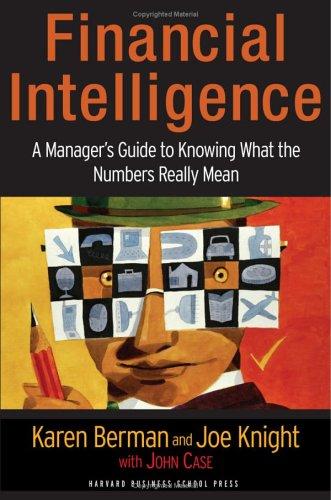
Written for managers without formal finance training, this book explains the logic and genuine limitations behind financial statements — including the judgement calls and assumptions baked into every number — so readers can interpret their own accounts with real confidence instead of taking them as objective fact.
Key lessons
- Financial statements involve real judgement calls and assumptions, not objective, indisputable fact — knowing where those live matters.
- The difference between the income statement, balance sheet and cash flow statement, explained without jargon, changes how you read all three.
- Ratios only mean something in context — compared to your own trend over time and to your specific industry, not in isolation.
- Working capital management is where a lot of otherwise-profitable small businesses quietly run into trouble.
Financial statements are built on judgement calls, not pure objective fact — genuinely understanding where those judgement calls sit is what turns 'financial literacy' into real financial intelligence.
What’s aged well
The fundamentals-focused approach remains a well-regarded, frequently recommended primer for non-financial managers.
What feels outdated
Nothing significant; core accounting logic doesn't really change.
The Business Stuff verdict
One of the clearest ground-up explanations of financial statements for a non-accountant, still widely recommended.
Three things to actually do after reading it
- Sit down with your last set of accounts and identify one judgement call or assumption baked into a number you'd previously taken as fact.
- Compare one of your own ratios against your own trend over the past year, not just a single snapshot.
- Review your working capital position specifically, not just overall profitability.
If you liked this, read next
Five similar books
- Simple Numbers, Straight Talk, Big Profits! (Greg Crabtree)
- Accounting Made Simple (Mike Piper)
- Profit First (Mike Michalowicz)
- The Intelligent Investor (Benjamin Graham)
- How to Read Your Management Accounts in 15 Minutes