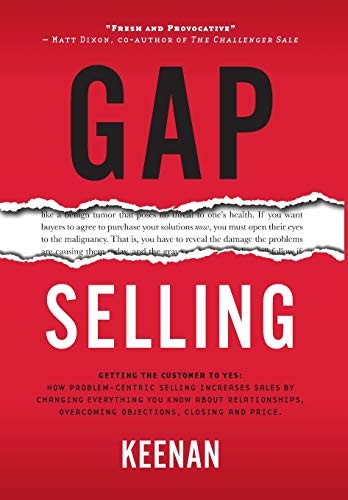
Keenan's framework centres sales around the 'gap' between a customer's current state and their desired future state — the size and clarity of that gap is what actually creates urgency to buy, not clever pitching. Salespeople are pushed to diagnose deeply before prescribing anything, much like a doctor.
Key lessons
- The size of the gap between current state and future state — not the product's features — is what creates genuine buying urgency.
- Diagnose the customer's actual problem thoroughly before proposing any solution, rather than pitching product first.
- Many buyers don't fully understand their own current state or its true cost until a good salesperson helps them see it clearly.
- Objections are frequently a sign the gap wasn't established clearly enough earlier in the conversation.
Customers buy to close a gap between where they are and where they want to be — establishing that gap clearly matters more than any feature pitch.
What’s aged well
The diagnostic, gap-focused approach remains a well-regarded modern addition to consultative selling methodology.
What feels outdated
Nothing significant given its recent publication.
The Business Stuff verdict
A clear, well-argued framework that complements SPIN Selling's older diagnostic approach with more modern language.
Three things to actually do after reading it
- Before your next pitch, map the prospect's current state and desired future state explicitly.
- Ask two more diagnostic questions than you normally would before proposing a solution.
- Review a recently lost deal for whether the gap was ever made genuinely clear to the buyer.
If you liked this, read next
Five similar books
- SPIN Selling (Neil Rackham)
- The Challenger Sale (Dixon & Adamson)
- Never Split the Difference (Chris Voss)
- To Sell Is Human (Daniel Pink)
- The Psychology of Selling (Brian Tracy)