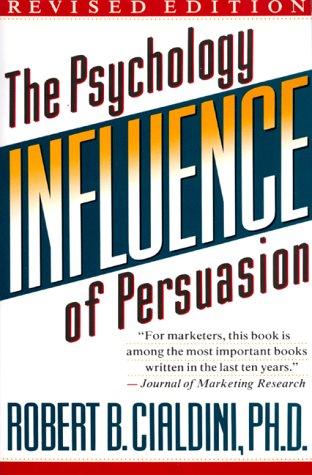
Cialdini identifies six (later expanded to seven) universal principles that drive people to say yes: reciprocity, commitment and consistency, social proof, liking, authority, scarcity, and unity. Drawing on both formal research and years spent undercover training with salespeople, fundraisers and marketers, he shows how these principles get used — and misused — constantly, and how to apply them ethically in your own business.
Key lessons
- Reciprocity: people feel obliged to return favours, even small unsolicited ones — genuine value given first builds real goodwill.
- Social proof: people look to others' behaviour to decide their own, especially under uncertainty — which is why testimonials and reviews work.
- Authority: genuine, relevant expertise signals trustworthiness — credentials and demonstrated knowledge measurably change how persuasive you are.
- Scarcity: people want more of what there's less of, but manufactured scarcity that isn't genuine erodes trust once customers notice.
- Commitment and consistency: people want to act in line with commitments they've already made, even small ones — which is why small first steps matter in sales.
Persuasion isn't manipulation when it's built on genuine value, genuine expertise and genuine scarcity — the same principles that persuade unethically also work honestly, and honestly is more sustainable.
What’s aged well
The six principles are grounded in solid, well-replicated psychology and remain directly observable in modern marketing, online and off.
What feels outdated
A few of the classic case examples feel dated, and some of the more manipulative applications the book documents (fake scarcity, dishonest social proof) have become so overused online that audiences are now more sceptical of them than they were in 1984.
The Business Stuff verdict
A genuinely foundational marketing and sales psychology book — read it to use these principles ethically, and to spot when they're being used on you.
Three things to actually do after reading it
- Add one genuine piece of social proof (a real review, a real number) to your highest-traffic sales page or listing.
- Find one place you're offering something valuable for free before asking for the sale, and make sure it's genuinely useful, not a bait-and-switch.
- Audit your marketing for any scarcity claims that aren't strictly true, and fix or remove them before a customer catches you out.
If you liked this, read next
Five similar books
- Pre-Suasion (Robert Cialdini)
- Thinking, Fast and Slow (Daniel Kahneman)
- This Is Marketing (Seth Godin)
- Contagious (Jonah Berger)
- Predictably Irrational (Dan Ariely)