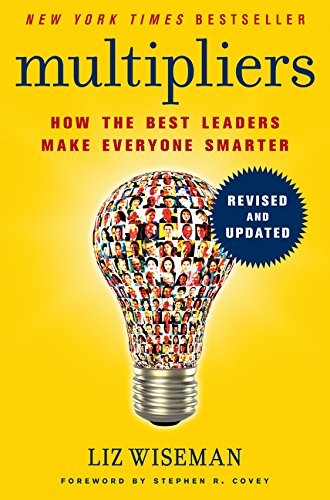
Wiseman's research distinguishes 'Multiplier' leaders, who amplify the intelligence and capability of the people around them, from 'Diminisher' leaders, who — often unintentionally — shrink it through micromanagement, over-involvement or always having the answer first. The book maps five practices that separate the two.
Key lessons
- Diminisher leaders often believe they're helping by having all the answers, while quietly training the team to stop thinking for themselves.
- Multiplier leaders ask hard questions rather than supplying answers, which builds real capability over time.
- Giving people genuine ownership of a problem, not just a task, is what produces multiplied effort and initiative.
- Even well-intentioned leaders can be 'accidental diminishers' without realising it — self-awareness here takes deliberate effort.
The most valuable thing a leader can do is amplify the intelligence already in the room, not be the smartest or most involved person in it.
What’s aged well
The Multiplier/Diminisher framing remains a widely referenced, useful lens for leadership self-assessment.
What feels outdated
Nothing significant; the core research and framework remain relevant.
The Business Stuff verdict
A genuinely useful mirror for leaders who suspect they're doing too much of the thinking for their team.
Three things to actually do after reading it
- In your next team problem, ask a hard question instead of supplying your own answer first, and see what happens.
- Notice one recent moment where you jumped in to solve something a team member could have solved themselves.
- Hand over genuine ownership of one problem, not just a task, to someone capable of rising to it.
If you liked this, read next
Five similar books
- Radical Candor (Kim Scott)
- High Output Management (Andy Grove)
- Who Not How (Dan Sullivan & Benjamin Hardy)
- The Culture Code (Daniel Coyle)
- Extreme Ownership (Jocko Willink & Leif Babin)