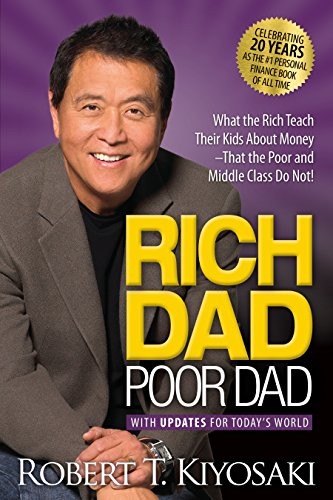
Framed as a comparison between the financial philosophies of Kiyosaki's own father (educated, but financially cautious and employee-minded) and his best friend's father (an entrepreneur, financially bold), the book's core argument is simple: the rich buy assets, the poor and middle class buy liabilities they mistakenly call assets, like an owner-occupied home. Whatever you make of the disputed authenticity of the two 'dads', the underlying reframe of assets versus liabilities has genuinely changed how a generation of readers think about money.
Key lessons
- An asset puts money in your pocket; a liability takes money out — many things people call assets (like a personal home) are, by this strict definition, liabilities.
- Financial literacy — understanding accounting, investing, markets and law — matters more than how much you earn.
- 'The rich don't work for money, they make money work for them' — building or acquiring income-generating assets beats trading time for a salary alone.
- Fear and self-doubt stop most people from taking the financial risks that actually build wealth — not lack of opportunity.
- Your own financial education is your responsibility; most school systems don't teach it, so you have to seek it out deliberately.
Reframing the basic question from 'how much do I earn' to 'what assets am I actually building' changes long-term financial decisions more than any single tactic.
What’s aged well
The core asset-versus-liability reframe remains a genuinely useful mental model regardless of how you feel about the author's later career.
What feels outdated
Several of the book's specific factual claims and the authenticity of the 'rich dad' character have been credibly challenged over the years, and some later advice from the same author has been widely criticised — read the original book on its own merits rather than as investment advice.
The Business Stuff verdict
Useful as a mindset primer despite the disputed backstory; pair it with more rigorous personal finance reading before acting on anything specific.
Three things to actually do after reading it
- List your current assets and liabilities using the book's strict definition, not the conventional accounting one.
- Identify one liability you've been calling an asset, and reconsider it honestly.
- Commit to one hour a week of genuine financial education — books, courses, or a proper conversation with an adviser.
If you liked this, read next
Five similar books
- The Psychology of Money (Morgan Housel)
- The Millionaire Next Door (Thomas Stanley)
- Your Money or Your Life (Vicki Robin)
- I Will Teach You to Be Rich (Ramit Sethi)
- The Barefoot Investor (Scott Pape)