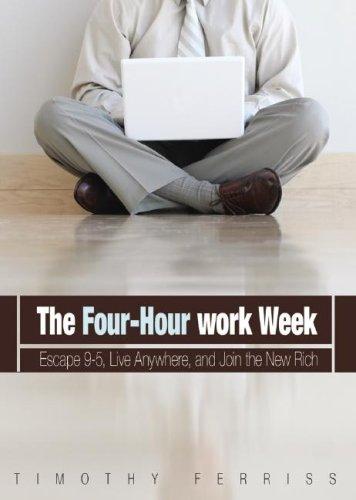
Ferriss's central pitch — design a business and lifestyle around freedom rather than around a traditional career — was genuinely ahead of its time in 2007. The book's most durable contribution is the DEAL framework: Definition (redefine what you actually want), Elimination (apply the 80/20 rule ruthlessly), Automation (systems and outsourcing), Liberation (location independence). The literal '4-hour' framing is more provocation than promise, but the underlying questions about what deserves your time are genuinely useful.
Key lessons
- The 80/20 rule applied ruthlessly: a small fraction of your activities produce most of your results — find them and cut the rest.
- A 'low-information diet' — deliberately limiting inputs — protects the focus needed for meaningful work.
- Outsourcing and delegation aren't just for large companies; virtual assistants and contractors can absorb far more of a small business's admin than most owners assume.
- Batch similar tasks together and check email/messages at set times rather than reactively throughout the day.
- Design the lifestyle first, then build a business that funds it — rather than assuming the lifestyle is a reward that comes after building the business.
Most of what fills a business owner's day doesn't actually move the business forward — ruthlessly questioning that is worth doing long before you're burnt out.
What’s aged well
The 80/20 focus and the case for outsourcing routine work remain genuinely useful, and are arguably easier to act on now than in 2007 given how much cheaper outsourcing has become.
What feels outdated
The tone hasn't aged gracefully, and the '4-hour' framing oversells what's realistically achievable for most small business owners — read it for the underlying principles, not the literal promise.
The Business Stuff verdict
Worth reading for the DEAL framework and the permission to question your own busywork, with a healthy filter on the more hype-driven claims.
Three things to actually do after reading it
- List your last week's tasks and identify the 20% that produced 80% of the actual results.
- Find one recurring task you could hand to a virtual assistant or contractor this month, and price out what it would cost.
- Set two fixed times a day to check email/messages instead of leaving notifications on throughout the day.
If you liked this, read next
Five similar books
- Deep Work (Cal Newport)
- Company of One (Paul Jarvis)
- Essentialism (Greg McKeown)
- The One Thing (Gary Keller)
- Atomic Habits (James Clear)