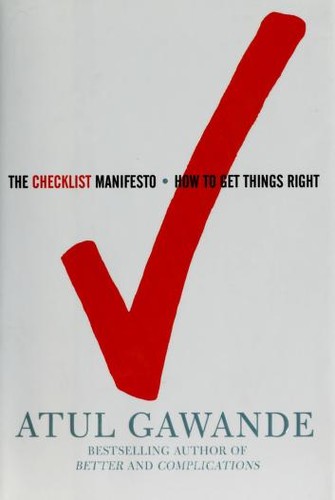
Surgeon and writer Gawande investigates why complex fields like aviation and surgery increasingly rely on simple checklists, despite expert practitioners' instinct that they shouldn't need one. The answer: as complexity grows, even highly skilled experts reliably miss small, obvious steps under pressure — and a good checklist catches exactly that.
Key lessons
- Even highly skilled experts reliably miss small, obvious steps under pressure — it's not about ability, it's about the limits of memory under complexity.
- A good checklist is short, specific, and focused on the steps most likely to be missed, not an exhaustive list of everything.
- Checklists work best when built and refined by the people who'll actually use them, tested against real failures.
- The goal of a checklist isn't to replace expert judgement — it's to free up mental capacity for the judgement calls that actually need it.
Complex, high-stakes processes fail less from lack of skill and more from small, forgettable steps under pressure — a short, well-designed checklist is one of the highest-leverage quality tools available to any business.
What’s aged well
The core argument, grounded in aviation and surgery case studies, remains widely cited and applied across industries.
What feels outdated
Nothing significant; the logic is structural, not trend-dependent.
The Business Stuff verdict
A genuinely persuasive, well-told case for one of the simplest, most underused tools in any process-driven business.
Three things to actually do after reading it
- Build a short, specific checklist for your single highest-stakes recurring process this week.
- Test the checklist against a real past failure and see whether it would have caught it.
- Involve whoever actually runs the process in refining the checklist, rather than writing it top-down alone.
If you liked this, read next
Five similar books
- The Goal (Eliyahu Goldratt)
- High Output Management (Andy Grove)
- Getting Things Done (David Allen)
- Traction (Gino Wickman)
- The E-Myth Revisited (Michael Gerber)