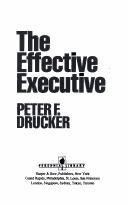
Drucker argues that effectiveness — getting the right things done — is a discipline that can be learned, distinct from raw intelligence or hard work. The book covers time management, contribution-focused thinking, strengths-based delegation, and disciplined decision-making, decades before most of these ideas became mainstream.
Key lessons
- Effectiveness is a learnable discipline, not an innate trait — anyone can develop it with deliberate practice.
- Know where your time actually goes, through honest tracking, before trying to manage it better.
- Focus on your contribution — what you're uniquely positioned to deliver — rather than just staying busy.
- Build on strengths, both your own and your team's, rather than spending disproportionate effort shoring up weaknesses.
Effectiveness — doing the right things, not just doing things efficiently — is a learnable discipline, and most executives never deliberately develop it.
What’s aged well
Remarkably well for a 1967 book — many of its ideas (strengths-based management, contribution focus) are now mainstream but were genuinely ahead of their time.
What feels outdated
The prose style and some references are of their era, and it's a denser read than most modern equivalents.
The Business Stuff verdict
A foundational text that rewards patience — many later, more famous management books draw directly from its ideas.
Three things to actually do after reading it
- Track your actual time honestly for one week before assuming you know where it goes.
- Write down your specific, unique contribution to the business, distinct from being generally busy.
- Identify one team member's strength you could deploy more, instead of managing around a weakness.
If you liked this, read next
Five similar books
- High Output Management (Andy Grove)
- The 7 Habits of Highly Effective People (Stephen Covey)
- Multipliers (Liz Wiseman)
- Measure What Matters (John Doerr)
- Principles (Ray Dalio)