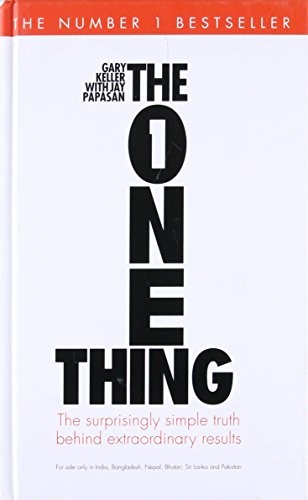
Built around one repeatable focusing question — 'what's the one thing I can do such that by doing it, everything else becomes easier or unnecessary' — Keller and Papasan argue that success comes from narrowing focus to a single priority at a time, not from spreading effort across many goals simultaneously.
Key lessons
- The focusing question — what's the one thing that makes everything else easier or unnecessary — cuts through a cluttered priority list fast.
- Multitasking is largely a myth; genuine focus on one thing at a time produces better results than switching between many.
- Time-block your most important 'one thing' first, protected, before the rest of the day fills in around it.
- Success is sequential, not simultaneous — going small on the right thing beats going broad on many things at once.
A single well-chosen focusing question — what's the one thing that makes everything else easier — cuts through competing priorities faster than any elaborate planning system.
What’s aged well
The core focusing question remains a widely used, practical tool referenced across productivity and business writing.
What feels outdated
Nothing significant; the core idea is simple enough not to date.
The Business Stuff verdict
A simple, memorable tool that's easy to actually apply, even if the surrounding book repeats the idea at some length.
Three things to actually do after reading it
- Ask the focusing question about your business right now, and write down the honest answer.
- Time-block your identified 'one thing' first in the day, before anything else fills the calendar.
- Review your task list and cut anything that isn't genuinely in service of your current one thing.
If you liked this, read next
Five similar books
- Essentialism (Greg McKeown)
- Deep Work (Cal Newport)
- Eat That Frog! (Brian Tracy)
- Getting Things Done (David Allen)
- Atomic Habits (James Clear)