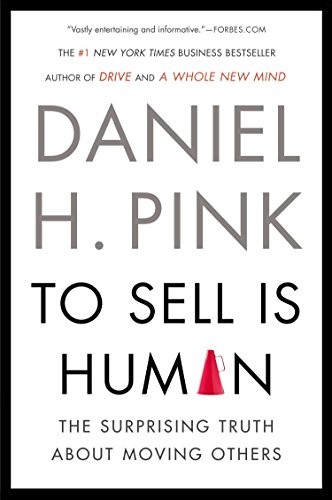
Pink argues that far more people are 'in sales' than job titles suggest — persuading a colleague, pitching an idea, convincing a customer — and that the profile of an effective modern seller has shifted from old stereotypes of pushiness towards attunement, buoyancy and clarity.
Key lessons
- Far more people are 'in sales' in a broad sense — moving others through persuasion — than formal sales job titles suggest.
- Attunement (understanding another's perspective), buoyancy (staying resilient through rejection) and clarity (framing the real problem) define modern effective selling.
- Ambiverts — a mix of introvert and extrovert traits — tend to outperform pure extroverts in sales, against the common stereotype.
- Framing choices as a smaller number of clear options, rather than many, tends to make people more likely to decide at all.
Persuasion is a near-universal skill, not a niche job title — and the traits that make someone genuinely effective at it are more nuanced than the pushy stereotype suggests.
What’s aged well
The reframing of selling as a universal human skill has held up well and is widely referenced.
What feels outdated
Nothing significant given the broad, evergreen framing.
The Business Stuff verdict
An accessible, well-argued case for taking persuasion seriously even if you don't carry a sales title.
Three things to actually do after reading it
- Identify one non-sales role in your business (ops, support, delivery) that would benefit from basic persuasion skills training.
- Practise attunement by genuinely restating the other side's position before making your own case in your next pitch.
- Simplify your next set of options down to two or three clear choices instead of an overwhelming list.
If you liked this, read next
Five similar books
- Influence (Robert Cialdini)
- Made to Stick (Chip & Dan Heath)
- Never Split the Difference (Chris Voss)
- Drive (Daniel Pink)
- Exactly What to Say (Phil M. Jones)