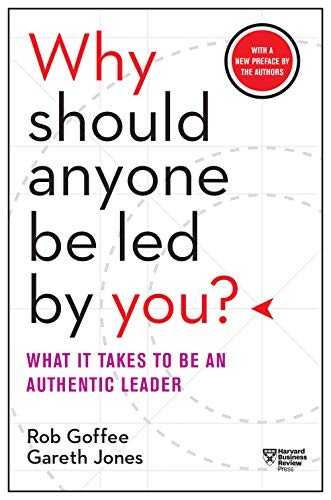
Goffee and Jones push back on the idea of a single ideal leadership style, arguing instead that authentic leadership comes from knowing and deploying your genuine self — including selectively showing weakness, reading situations accurately, and managing 'social distance' from your team deliberately.
Key lessons
- Effective leadership is highly situational and personal — there's no single template that works for every leader in every context.
- Selectively revealing genuine weakness, rather than projecting constant strength, builds more trust, not less.
- Leaders need to sense and adapt to context ('situation sensing') rather than applying the same approach everywhere.
- Managing the right social distance from your team — close enough to connect, far enough to maintain authority — is a deliberate skill.
Authentic leadership isn't about adopting a famous leader's style — it's about understanding your genuine strengths and using them deliberately, including your vulnerabilities.
What’s aged well
The authenticity argument anticipated a broader shift in leadership thinking away from a single 'ideal' leader archetype.
What feels outdated
Some examples are dated, and the writing is more academic than most books on this list.
The Business Stuff verdict
A thoughtful, if less immediately practical, counterpoint to formulaic leadership advice.
Three things to actually do after reading it
- Identify one leadership trait you've been copying from someone else that doesn't actually fit how you naturally operate.
- Consider one situation where showing a genuine limitation, rather than hiding it, would build more trust with your team.
- Assess whether you're currently too close to, or too distant from, your team, and adjust deliberately.
If you liked this, read next
Five similar books
- Primal Leadership (Goleman, Boyatzis & McKee)
- Start with Why (Simon Sinek)
- Dare to Lead (Brené Brown)
- The 7 Habits of Highly Effective People (Stephen Covey)
- Multipliers (Liz Wiseman)